
Enrollment options
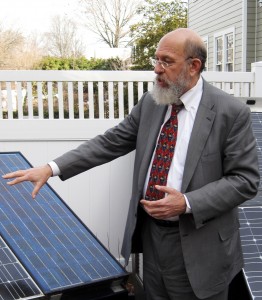
- Teacher: Scott Sklar

Course Overview
This course delves into the critical challenges posed by aging infrastructure in industrialized societies and emphasizes the transformative potential of distributed and smart energy solutions for resilient communities. It examines the vulnerabilities of our infrastructure to modern threats, including climate change, cyber-attacks, and natural disasters, and showcases cutting-edge technological responses. These include advancements in materials science, sensors & controls, AI, and blockchain. Students will explore the role of distributed energy systems and smart communities in mitigating infrastructure weaknesses alongside sustainable financing models and policy frameworks. and the implications for societal development and environmental stewardship.
Course Content
- 3 months to complete.
- 10+ hours of recordings.
- Webinars with the instructor.
- GWU Environmental and Energy
- Management Institute Certificate.
Price: $550
Learning Outcomes:
• Understand the vulnerability of current energy systems and the importance of transitioning to distributed energy models.
• Gain knowledge of various distributed energy technologies and "pay as you go" financing models shaping the future of energy.
• Learn about regulatory frameworks like the Clean Air Act and their role in guiding emissions control and greenhouse gas mitigation.
• Explore the implications of energy technology choices on land use, economic development, and workforce trends.
• Network with key industry, finance, government, and non-profit stakeholders driving technological innovation and development in course webinars

Meet the Instructor:
Sklar is an Adjunct Professor at George Washington University, teaches interdisciplinary courses on sustainable energy, and is affiliated with CATIE, focusing on sustainability in Latin America. He pioneered the U.S.'s first course on "Renewable Energy & Critical Infrastructure" at GWU, where he also directs sustainable energy initiatives. As President of The Stella Group, Ltd., Sklar's 23-year-old global business guides clean distributed energy solutions, leveraging technologies like advanced batteries, biogas, and photovoltaics to promote energy efficiency and sustainability.
Course Content
The course focuses on the interplay between aging infrastructure, climate change, and disruptive technologies. It brings insights from business, finance, and policy leaders alongside practitioners in each field. Students will engage with new technological and financial models and the role of government at various levels, preparing them for the dynamic challenges and opportunities in energy resiliency and smart community development.
Four 40-minute classes
- Segment 1: What is infrastructure? - Reviewing existing infrastructure in communities and cities In energy, water-sewage, telecommunications, internet, first responders, Government & non-profit providers (i.e., shelters, offices, etc.)
- Segment 2: Existing risk profiles: Big Challenges Impacting Resiliency of Infrastructure Frank review of energy, water, telecom/internet transportation, and healthcare over the last 23 years
- Segment 3: Climate Change Pressures: Supercharged events and challenges
- Segment 4: Freshwater and Stormwater Management: Signature issue in more than half of US cities and communities
- Segment 1: Building Resiliency: Zero & Net Zero Program
- Segment 2: Industrial Resiliency
- Segment 3: Transportation Continuity
- Segment 4: Shared Infrastructure: Publicly Shared Infrastructure
- Segment 1: Emerging Trends - Power augmentation, virtual power plants & net metering, microgrids, sectionalizers & reclosers, & interface with motors, buildings, etc
- Segment 2: Sensors, Controls, AI-Blockchain
- Segment 3: Interconnection and Inter-response – transmission, distribution systems
- Segment 4: Energy Storage: Primarily smart controls and battery banks in cities and communities
Financing & Policies
- Segment 1: Microgrids – Community Solar – Islanding
- Segment 2: Land Use, Recycling
Repurposing Re-Use, Energy Efficiency
- Segment 3: Government Facilities and Services
- Segment 4: Financing Resiliency - Public and Private Markets Bonds and Government-Backed Instruments - with Private capital tools
- Course Conclusion
- Final Exam
- Teacher: Scott Sklar